
News Summary
Dallas businesses are on edge as they anticipate the effects of a new 100% tariff on Chinese goods set to take effect soon. Local owners report significant price changes and market shifts, particularly in the automotive industry. Rising inflation and delivery delays heighten the uncertainty, prompting business owners to adjust strategies in response to the evolving economic landscape. With the Supreme Court set to review the president’s authority over tariffs, the future of Texas businesses hangs in the balance.
Texas businesses are facing significant challenges as a new 100% tariff on Chinese goods is set to take effect on November 1. This sweeping policy, announced by President Donald Trump, is expected to exacerbate the economic difficulties already felt by many in the state as they navigate the residual effects of the COVID-19 pandemic. A Supreme Court hearing is scheduled for November 5, which will address the extent of the president’s authority concerning country-specific tariffs.
Local business owners in Texas report that they have been adversely affected by the ongoing tariff situation. Price fluctuations for essential materials have become a normal part of daily operations. For instance, Steve Harman, co-owner of MediaHead, indicated that since March 2025, the costs for key equipment, such as lighting and cameras, have risen sharply. These dynamic price changes complicate the company’s ability to provide reliable quotes, with prices sometimes altering significantly within days.
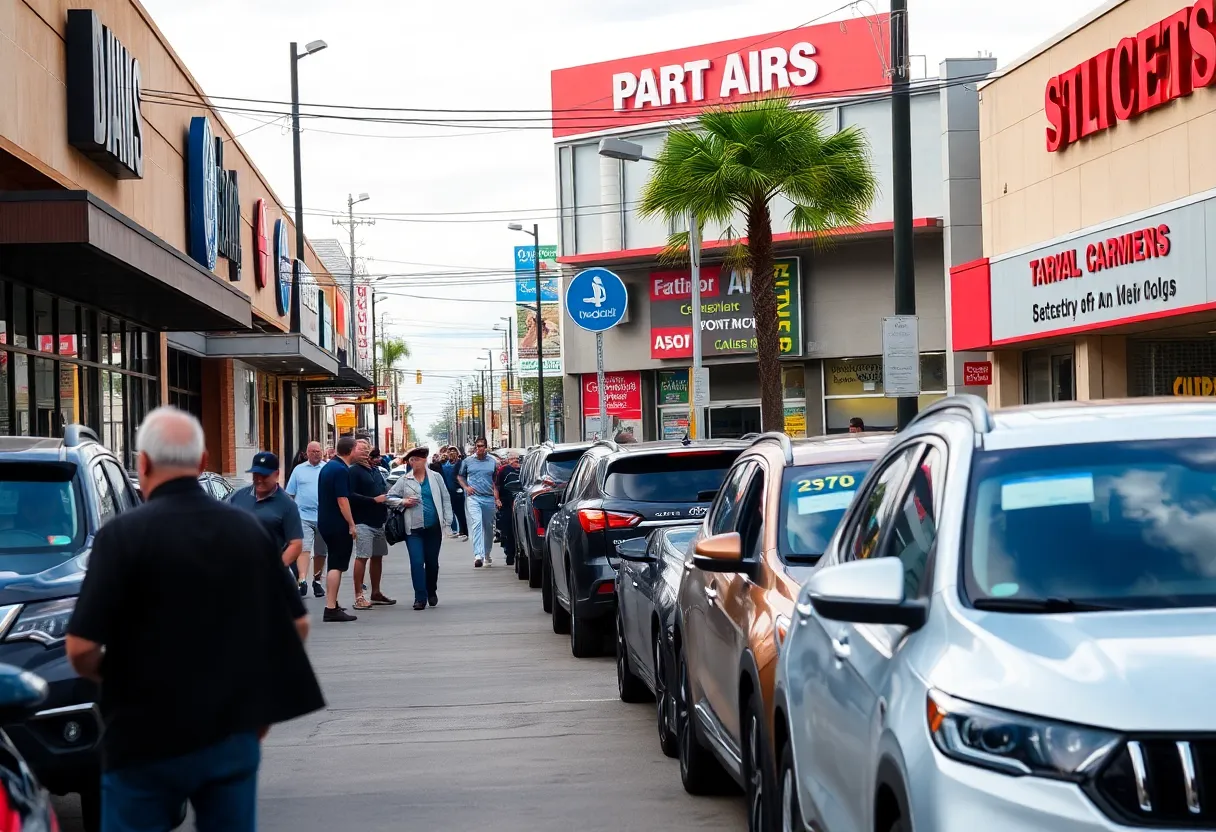
In the automotive sector, reports show a decline in new car sales while the demand for used vehicles has risen markedly. Don Herring, CEO of Don Herring Mitsubishi, explained that amidst the uncertainties generated by the tariffs, current dealership rebates on 2025 models are less generous compared to those for 2024 models. This trend is a direct consequence of the tariffs, which are raising costs for state businesses and impacting consumer purchasing decisions.
Nationally, rising import costs—estimated to be around 5%—are contributing to overall inflation. Economic experts are modeling the potential impacts of these tariffs on Texas’s economy, predicting the state’s GDP could decrease by as much as 1.5%. This dip could equate to a loss of approximately $47 billion, putting nearly 100,000 jobs at risk across various industries.
Companies like MediaHead are adapting to the financial strain by focusing on selective project management and expanding their service offerings. However, the economic environment remains fraught with uncertainty, evidenced by severe delays in product delivery times. What once took five days for orders to arrive has now expanded to several weeks due to these supply chain disruptions.
Moreover, the ripple effects of these tariffs are not limited to the manufacturing and retail sectors. The real estate market in North Texas is also experiencing a notable downturn, with sellers compelled to auction properties to attract buyers amid an increasingly cautious market atmosphere. The overall economic climate instigated by tariffs and trade policies is raising concerns over Texas’s future economic growth prospects.
Texas maintains its status as the leading exporting state in the U.S., with approximately $455 billion in goods shipped last year. Nonetheless, the impending tariffs threaten to impose further strain on the state’s already fragile economy. Business leaders worry that continued tariffs paired with an overregulated environment could hamper growth and innovation.
The evolving situation is prompting manufacturers and retailers to recalibrate their strategies, including limiting rebates and incentives to deal with the increased import costs effectively. As these businesses grapple with these new tariffs, they are engaging in a delicate balancing act to remain profitable while servicing the needs of their customers amidst a changing economic landscape.
Looking ahead, the potential for real estate developments such as AI data centers presents an opportunity for growth in Texas, driven largely by the state’s abundant natural gas resources. The future impact of these tariffs remains uncertain, but the consensus among experts and business leaders is that immediate action and strategic adjustments are vital to mitigating risks associated with these changes.
Deeper Dive: News & Info About This Topic
- Spectrum Local News: North Texas Business Owners Feeling Impact of Tariffs
- San Antonio Express-News: Biggest Scare for Costume Shops This Halloween
- Politico: Trump Mixes New Truck Tariffs with Auto Tariff Relief
- Star-Telegram: Fort Worth Business News
- Houston Chronicle: Michael McCaul on Trump Tariffs and China
- Wikipedia: Tariffs
- Google Search: Impact of Tariffs
- Google Scholar: Tariffs and Economics
- Encyclopedia Britannica: Tariff
- Google News: Tariffs in Texas